Insights into the next wave of architecture graduates
By Emily | Jun 2021
Matthew Walker is an Associate at RHA. Matthew lives, sleeps and breathes architecture and has an enthusiasm to match. Now with 10 years of experience in practice, Matthew also attends Canterbury University as a guest critic offering advice for students nearing the end of their studies.
Here, he shares his insights into nurturing new architectural talent, the diversity of projects and the future of VR in the sector.
GALLERY
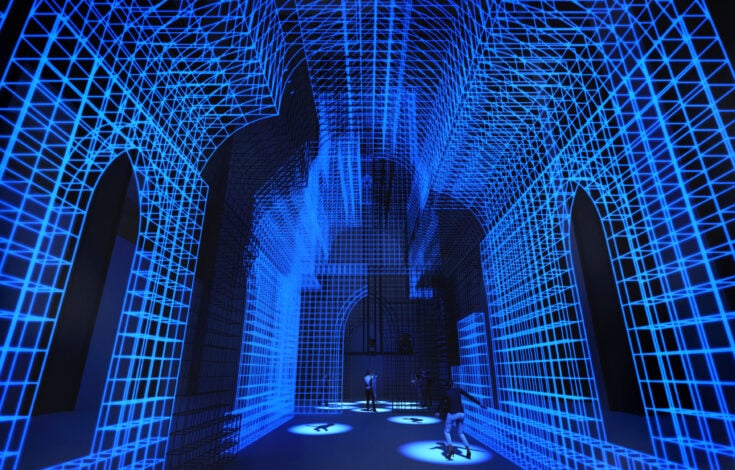

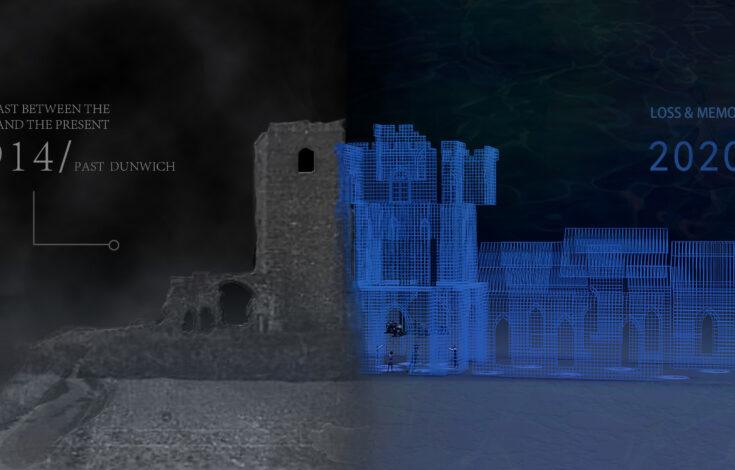
You’re known as a guest critic. What’s your role in an architectural course?
Many people wouldn’t know this but instead of written exams, the main way that students work is assessed in architecture school is through a review known as a critic or crit.
This can be quite a daunting experience where the student has to pin their work up on a wall (which they’ve often had a nightmare printing at 3am that morning) along with any models, videos, artwork etc and present this, not only to their class and tutors but also to guest critics who come into the school to give an outside perspective.
Guest critics are often practising architects, artists, academics or anyone else who can provide useful insight.
It’s where students learn the practical skills that they will use when presenting to clients or planning committees in their future careers. When I was a student, however, one of the most useful things I found about the crit was the feedback loop aspect of it. The students don’t simply present once at the end of the year but rather it is an interactive process where the work is reviewed at various stages of the project. This is also the benefit of having guest critic who can view the projects from a different perspective. Sometimes with a simple suggestion or question from some fresh eyes, weeks of design block can be eradicated. I remember when I was studying I also used to try and get as many different tutors/critic to review my work as possible.
Why did you want to be involved as a critic at Canterbury School of Architecture?
Firstly I find it really fun and interesting. You get such a variety of projects, ideas and approaches that it’s like watching 10 documentaries at once.
When I was studying, we were encouraged to give out feedback to our fellow students and I always enjoyed getting involved in the conversation then. That’s another point to mention about the crit itself, it’s often a conversation between the students, tutors and critic who don’t always agree with each other so it becomes a bit of a debating chamber.
I would also like to think that I can help the students with their work. Being a relatively young architect it doesn’t seem all that long ago when I was doing it myself and sometimes just by telling a student how you got over a similar problem can help their work. As an external critic, I hope that sometimes just a word of encouragement here and there can help the students who are stuck in a rut.
What have you learnt from this year’s students?
What haven’t I learnt! The projects are so varied you get taught about things ranging from the psychology of end-of-life care to post-Brexit port infrastructure in Dover.
Think of it like speed dating, where you receive a small insight into a wide spectrum of projects and then want to get to know them all better!
It has also been encouraging to see how the students have been able to produce such engaging projects in the midst of a global pandemic. The school has a large international cohort, and some student had gone home (which can be as far away as China!) but had still remained in contact with their fellow students and tutors. There still seemed to be a real camaraderie between the students, despite not all being working in the physical workshop or studio.
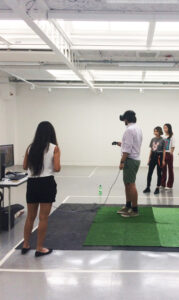 You’ve seen an increase in the use of VR in the students. Where do you think the future of VR sits within in architecture?
It is still very much in its infancy but with the speed that technologies progress nowadays, it will develop at a pace. From a design point of view, it could have two benefits. The first would be the evolution of BIM (building information modelling) technology where a 3D computer model of the building is created instead of 2D drawings.
Whilst this technology is already quite advanced and allows architects, structural engineers, services engineers etc to coordinate their designs in three dimensions, VR would allow the architect to walk around the space and ensure that what they imagined is actually working the 3D form. It could also be used in communicating designs to the client so they know exactly what they’re getting.
I think VR could have a real benefit in architectural education if the technology can be developed in such a way that it saves time in producing drawings, visuals etc. If the process of producing the visual information could be sped up and realised in the virtual world students and tutors could spend a lot of time focusing on the details of the design itself.
What piece of advice would you give to any aspiring young architects?
If it interests you go for it! I often joke that I only chose architecture because I couldn’t be bothered to flick past A in the university prospectus but in reality, I’m so glad I chose to study it and now get to work on great projects on a daily basis. The education is so broad that it really caters for all interests.
Some students are also put off by the length of the course but I think the longer you can enjoy student life the better. For any students who are already in architectural education, I would advise them to try and make projects that relate to their own interests. This will make the late nights preparing virtual reality models much more bearable. Oh and don’t forget to have a big party when you’ve finished!

